|
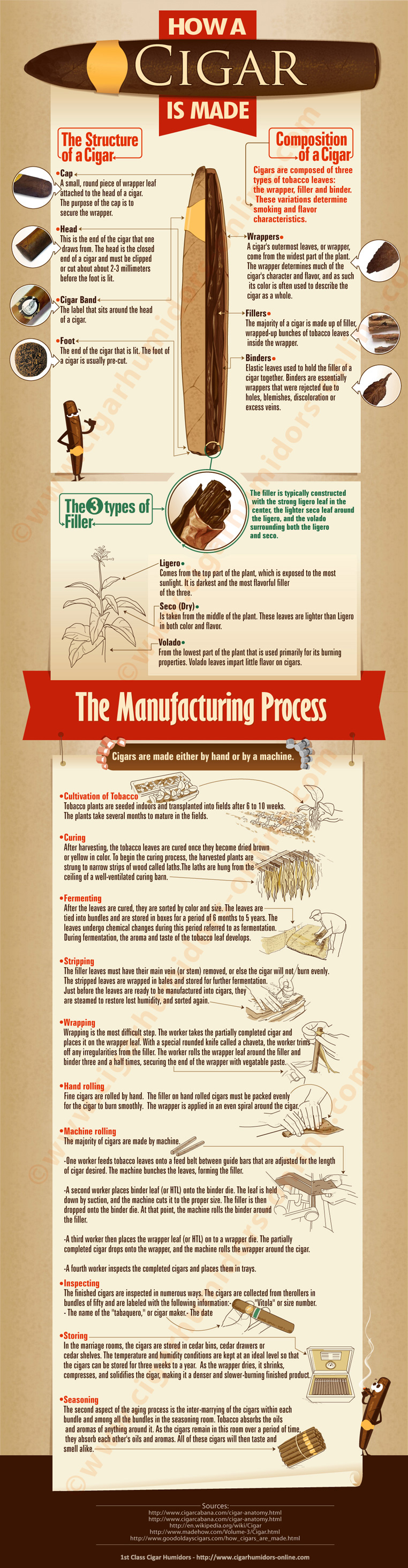
The Infographic information is displayed in text form here: Cigars are made carefully through the following process: Before we explain the specifics, we first want to familiarize you with the structure and composition of a cigar. The Structure of Cigar - Cap - A small, round piece of tobacco wrapper leaf attached to the head of a cigar. The purpose of the cap is to lock in the wrapper and finish the head. Head - This is the part of the cigar that one draws or smokes from. The head is always the closed end of the cigar and must be cut about about 3 millimeters before the foot is lit. Cigar Band - The label that surrounds the head of the cigar. Foot - The foot of a cigar is normally pre-cut and is the part of the cigar that is lit. Composition of Cigar - Cigars are made up of of 3 types of tobacco leaves: the wrapper, filler and binder. Variations of these will determine the flavor characteristics of the cigar. Wrappers - The leaves on the outer or widest part of the tobacco plant. The wrapper has a large influence on a cigar's overall character and flavor. The wrapper color is often used to describe the cigar in general. Fillers - The large majority of a cigar is comprised of filler. Filler is bunches of tobacco leaves grouped together inside the wrapper. Binders - Leaves that have an elastic character that are used to secure the filler of a cigar together. Binders are for the most part wrappers that were rejected linked to blemishes, holes, discoloration or excessive veins, etc. The 3 types of Tobacco Filler -Filler is generally made up of strong ligero leaf in the middle, the lighter seco leaf surrounds the ligero and the volado wraps around both the ligero and seco. Ligero - Is harvested from the top of the tobacco plant, which is normally exposed to the highest level of direct sunlight. It is normally the darkest and the most flavor rich filler of the three. Seco (Dry) - Is pulled from the central portion of the plant. These tobacco leaves are generally lighter than Ligero in both flavor and color. Volado - is extracted from the lowest portion of the plant. Volado is mostly utilized for its burning properties to help keep a consistent burn. Volado leaves have very little influence on the flavor of a cigar.
The Manufacturing Process - Cigars are made in 2 ways. By hand or machine. Cultivation of Tobacco - Tobacco plants are planted and cared for indoors and transplanted into fields once they have aged 6 to 10 weeks. The plants then take several months to grow and mature in the tobacco fields before they are harvested. Curing - Once the plants are harvested, the tobacco leaves are then cured once they become yellow or dried brown in color. The curing process is begun when the harvested tobacco plants are secured and strung to laths (thin strips of wood). The laths are then hung in a curing barn that is well-ventilated. Fermenting - After the leaves are cured, they are grouped together and are tied into bundles by size and color. They are then stored away months to years. During this time, the tobacco leaves undergo chemical composition changes (fermentation). During the fermentation process, the tobacco's flavor and aroma intensifies. Stripping - The filler leaves are cleaned up and main vein and stems are removed. This is essential to insure the cigar burns evenly. The stripped tobacco leaves are wrapped in bales and stored away so that fermentation can progress further. Once the leaves are just about ready to be used, they are physically steamed to rejuvenate lost humidity. Wrapping - Wrapping is the most difficult step that can make or break the cigar. The worker takes the partially completed cigar and sets it on the wrapper tobacco leaf. With a unique tool called a chaveta (essentially a rounded knife), the worker trims away any abnormalities from the filler. The hand roller spirals the wrapper leaf around the binder and filler several times, and then finished it off by securing the end of the wrapper with a vegetable paste. The cigar is finished! Hand rolling - Premium cigars are made by hand. The filler of hand rolled cigars always must be packed carefully and evenly so the cigar always burns smoothly. The wrapper is rolled in an even spiral around the cigar. Machine rolling - The vast majority of cigars are manufactured by machine. Inspecting - Completed cigars are inspected in a variety of ways and vary from factory to factory. The cigars are grouped together from the rollers in bundles and are labeled and or stamped with the following details: "Vitola" or size number. The name of the "tabaquero," or cigar factory. And finally the Production Date.
|